
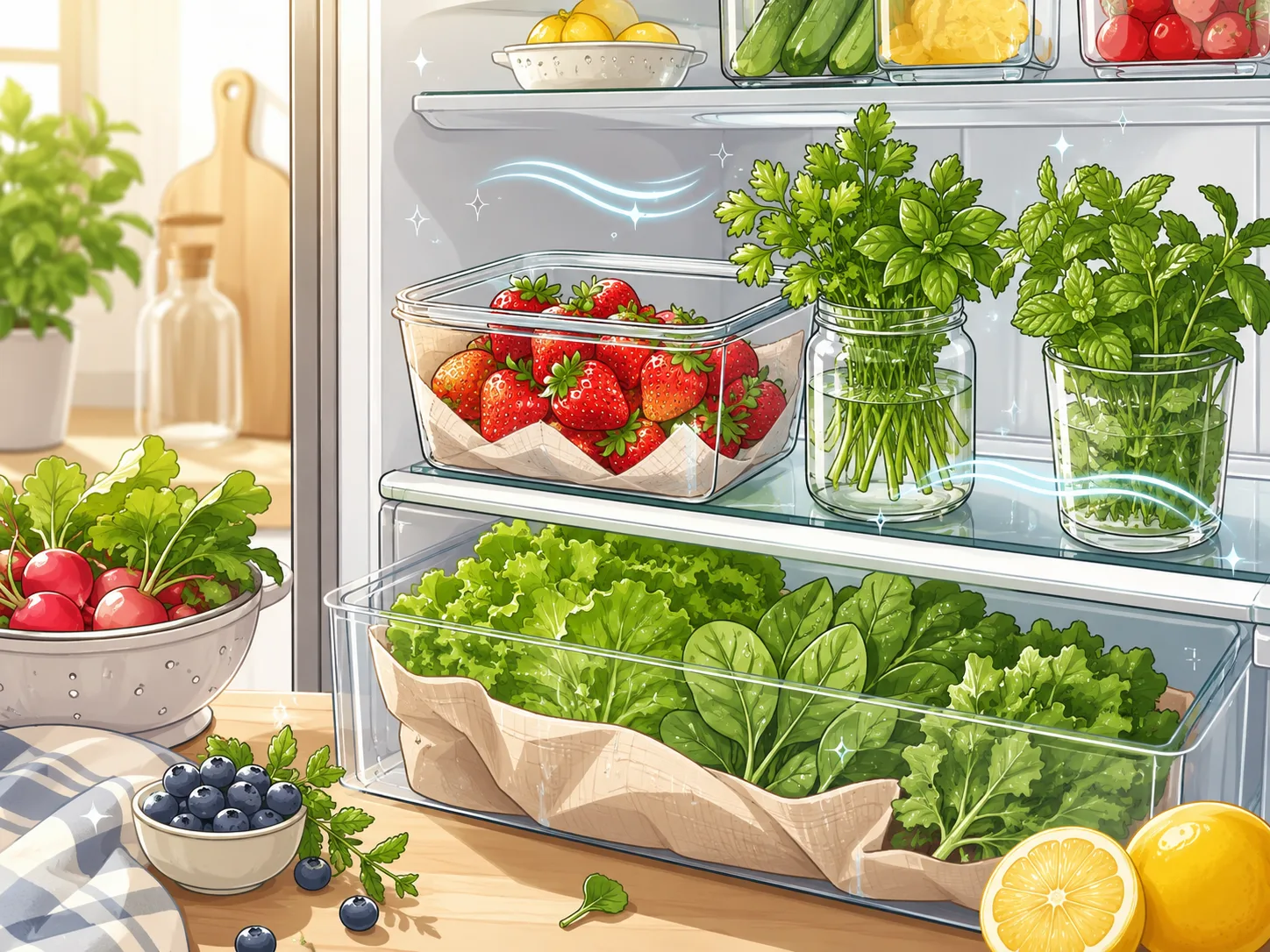
How to Store Strawberries, Herbs, and Leafy Greens
Storage habits that keep strawberries, herbs, and leafy greens easier to use before they fade.
Fresh produce is one of the easiest places to lose money
Delicate produce feels healthy and hopeful when you buy it. It also spoils fast when storage is sloppy.
FAO says fruits and vegetables are the easiest major food group to lose before they even reach people's plates. In 2023, global losses for fruits and vegetables reached 25.4% between harvest and retail. That does not mean your strawberries are doomed. It does mean fresh produce needs a better plan than "put it somewhere in the fridge and hope."
This was much higher than the overall food-loss estimate, which helps explain why these foods need better storage.
FAO estimated 25.4% losses for fruit and vegetables before retail, versus 13.3% across food overall.
Source: FAO SDG 12.3.1 data portal, 2023
The first 72 hours matter more than fancy containers
The most important produce question is not "What special hack should I buy?"
It is "What is the plan for the next three days?"
That is because strawberries, herbs, and leafy greens are exactly the foods that get lost to good intentions:
- they look fresh when you shop
- they feel optional once the week gets busy
- they disappear behind other groceries
So the strongest system is not only better storage. It is early use.
This helps explain why the most fragile foods need an early-use plan, not just better containers.
ReFED's roadmap framed nearly 80% of food waste as coming from perishable foods, which is why produce, dairy, and other delicate foods deserve earlier attention.
Source: ReFED, A Roadmap to Reduce U.S. Food Waste by 20 Percent
The core rule is boring but powerful
WHO keeps coming back to the same simple basics:
- keep fresh produce cold, below 5 C
- keep it separate from raw meat and seafood
- rinse produce under running water before use
- dry it well after rinsing
- do not overstock the fridge, because air needs to circulate
Those rules are more useful than any viral storage trick.
Strawberries
Strawberries are delicate, bruise easily, and get moldy quickly once moisture and damage build up.
A better routine:
- refrigerate them promptly
- remove obviously damaged berries early
- keep the container somewhere visible
- wash only the portion you are about to eat, or dry very well if you prep ahead
The goal is not magic. The goal is reducing moisture, damage, and forgetting.
Herbs
Herbs get wasted for a simple reason: they are small and easy to overlook.
What usually helps:
- refrigerate delicate herbs
- keep them dry enough that water is not pooling around them
- avoid crushing them under heavier groceries
- decide in advance where they will get used
If you know you will not use them quickly, turning them into a sauce, butter, or freezer portion is often better than waiting for a perfect recipe.
Leafy greens
Leafy greens fail in two ways:
- they stay too wet
- they disappear from view
WHO Europe's storage advice is useful here. Perishable greens belong in a clean refrigerator below 5 C. If you rinse them before use, dry them well. WHO Europe also suggests wrapping leafy vegetables with paper to help retain moisture without leaving them wet.
In practice, leafy greens last better when they have:
- a cold spot
- less trapped moisture
- a container or drawer you actually check
- a meal plan in the first few days
Storage helps, but visibility still wins
This is the part people underestimate.
A well-stored container hidden behind drinks still gets wasted.
A visible container with a plan gets eaten.
That is why delicate produce lasts longer in real life when you reduce friction between seeing it and using it.
Build a use-first routine
When you bring home fragile produce, ask one question immediately:
What is using this first?
That one question turns groceries into actions.
- strawberries become tomorrow's breakfast
- herbs become tonight's eggs, soup, or pasta
- greens become lunch, a side dish, or a rescue stir-fry in the first two days
That is a much stronger system than trying to store produce perfectly with no plan for eating it.
A simple 72-hour produce plan
If you want one routine that works in normal life, try this:
- day 0: put the produce away properly and make it visible
- day 1: use the most fragile item first
- day 2: use the herbs in something easy instead of waiting for the perfect recipe
- day 3: rescue the greens in soup, eggs, pasta, or a stir-fry
That turns delicate produce into scheduled food instead of hopeful decoration.
A gentle Chefito shortcut
Chefito helps by making fresh produce visible again. You can log what came home, mark what should be used first, and stop strawberries, herbs, and greens from quietly disappearing into the back of the fridge.
FAQ
How do you store strawberries so they last longer?
Keep them cold, remove damaged berries early, and only wash what you are about to eat unless you can dry them very well.
What is the best universal rule for delicate produce?
Keep it cold, keep it clean, keep it from sitting in extra moisture, and make a plan to use it early.
How do you keep herbs fresh?
Keep them cold, do not let them sit in puddles of water, and decide early what meal will use them.
Why do herbs get wasted so often?
Because they are small, fragile, and usually bought for one recipe without a plan for the rest.
Is the best solution a special container?
Sometimes containers help, but visibility and a real use-first plan usually help more.
Try the workflow
Ready to track your pantry instead of guessing?
Download Chefito to keep food dates visible, plan from your actual stock, and build a clearer shopping list.
Free to download. Paid upgrades, if chosen, are handled by Apple or Google.