
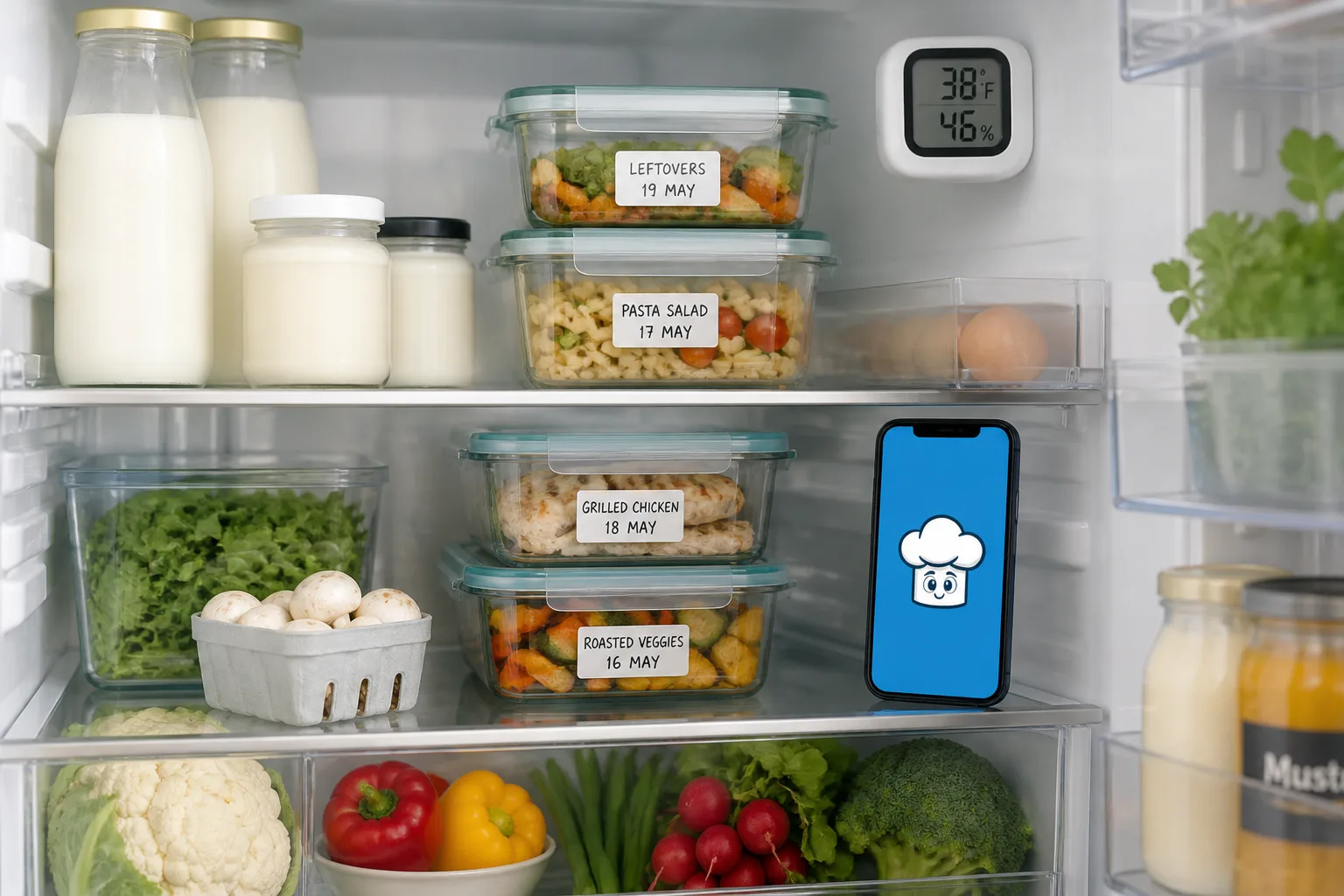
Safe Fridge Temperature: Why 5 C Matters
The safe fridge temperature range that keeps food safer, dates more reliable, and leftovers easier to trust.
Safe fridge temperature: the short answer
Your fridge should be cold, but not freezing.
For most homes, the easy rule is this:
- keep the fridge between 0 C and 5 C
- aim for below 5 C
WHO Europe says a fridge below 5 C helps protect food. The Food Standards Agency says the same range in simpler words: 0 C to 5 C. U.S. food-safety guidance expresses the same idea as 40 F or 4 C and below.
Why this matters more than people think
Dates, leftovers, milk, cooked food, and opened packs all depend on temperature.
If the fridge is too warm, food can spoil faster. That means:
- leftovers become risky sooner
- expiry dates feel less trustworthy
- good food gets thrown away more often
A cold fridge does not make food last forever. It does buy you safer time.
A useful number from real households
In the Food and You 2 Wave 10 survey, the Food Standards Agency asked people in England, Wales, and Northern Ireland what temperature a fridge should be.
The result was not as strong as it should be:
- 60% gave the correct answer: 0 C to 5 C
- 60% said they monitor their fridge temperature
That means a lot of homes are still guessing.
That means a large share of homes may still be guessing about a basic food-safety rule.
FSA says the safe fridge range is 0 to 5 C. The other 40% did not report that recommended range.
Source: Food and You 2: Wave 10, Food Standards Agency
What households think versus what households run
Knowing the target is not the same as hitting it.
The Food Standards Agency's Kitchen Life 2 work found an average household fridge temperature of 5.3 C in its sample, with temperatures ranging from -3.8 C up to 17.2 C.
That is exactly why this topic matters. A fridge can feel "cold enough" and still be making leftovers, milk, and ready-to-eat food harder to trust.
Comparing the recommended target with measured reality helps explain why dates and leftovers feel unreliable in practice.
FSA research cited an average household fridge temperature of 5.3 C. FSA guidance aims for 0 to 5 C, while U.S. guidance commonly says 40 F, or about 4.4 C, and below.
Source: Food Standards Agency research and FDA cold-storage guidance
What goes wrong in real life
Fridges usually drift into trouble for simple reasons:
- they are packed too tightly
- people trust the dial without checking
- leftovers go in warm and stay in big deep pots
- the door gets opened again and again
WHO Europe also warns that a cold fridge helps, but only if air can still move around the food.
This is the practical version of the problem:
- if you cannot trust the fridge, you should trust printed dates less
- if you cool leftovers slowly, the fridge has to fix a problem it did not create
- if the back of the fridge freezes and the door shelves stay warm, one fridge can behave like several different climates
A simple fridge check you can do today
You do not need a complicated system.
- check that your fridge is set to 5 C or lower
- use a fridge thermometer if you do not trust the built-in number
- let air move between foods instead of packing every gap
- cool leftovers quickly, then refrigerate them
- keep raw meat low and sealed so it does not drip onto other food
- divide large leftovers into shallow containers so they chill faster
The goal is not perfection. The goal is a fridge you can trust.
What this means for leftovers
Leftover advice only makes sense if the fridge is cold enough.
If your fridge sits too warm, even a careful leftovers plan can go wrong faster than expected. That is one reason people feel confused. They follow the date, but the temperature was the hidden problem.
So if leftovers always seem to "go off too fast," check the fridge before blaming the food.
What this means for Chefito
Chefito can help you track dates, opened items, and food that should be used first.
But the app works best when the food is stored well too.
A good way to think about it is:
- Chefito remembers the dates
- your fridge protects the food
You need both.
If you want the app ready before your next shop, download Chefito and use it to keep expiring food visible instead of relying on memory.
A simple Chefito habit
Try this:
1. check your fridge temperature this week 2. fix it if it is above 5 C 3. add leftovers and opened foods to Chefito 4. use Chefito's urgent items first
That one loop is simple, but it can save food fast.
If you also keep wondering whether leftovers should still be trusted, the next useful read is how long leftovers last in the fridge.
FAQ
What is a safe fridge temperature?
Between 0 C and 5 C is the simple home rule.
Is 7 C too warm for a fridge?
Yes. That is warmer than the usual safe target for chilled food at home.
How do I check my fridge temperature?
Use the fridge display if you trust it, or place a fridge thermometer inside and check it after the door has stayed shut for a while.
Does a cold fridge mean food lasts forever?
No. Cold slows problems down. It does not stop time.
Try the workflow
Ready to track your pantry instead of guessing?
Download Chefito to keep food dates visible, plan from your actual stock, and build a clearer shopping list.
Free to download. Paid upgrades, if chosen, are handled by Apple or Google.


Sources
- Public health advice on food safety during summer
WHO Europe
- Food safety in a heatwave: advice for consumers
Food Standards Agency
- Food and You 2: Wave 10
Food Standards Agency
- Storing chilled foods at incorrect temperatures
Food Standards Agency
- Refrigerator Thermometers - Cold Facts about Food Safety
FDA