How to Save Money on Groceries: Shop Your Kitchen First
A short kitchen check can make the next grocery list smaller and more useful. Start with what you already have.
In this article
The short answer
One smart way to save money on groceries is to check what you already own before you write a shopping list. Look in the fridge, freezer, and pantry. Choose food that needs using soon. Then buy only what is missing for the meals you will actually make.
This is less exciting than a stack of coupons. It is also something you can do before every shop, with no special deal to find. The U.S. Environmental Protection Agency recommends checking food at home, planning meals around it, and writing a list based on the meals you expect to eat.
Start with a five-minute kitchen check
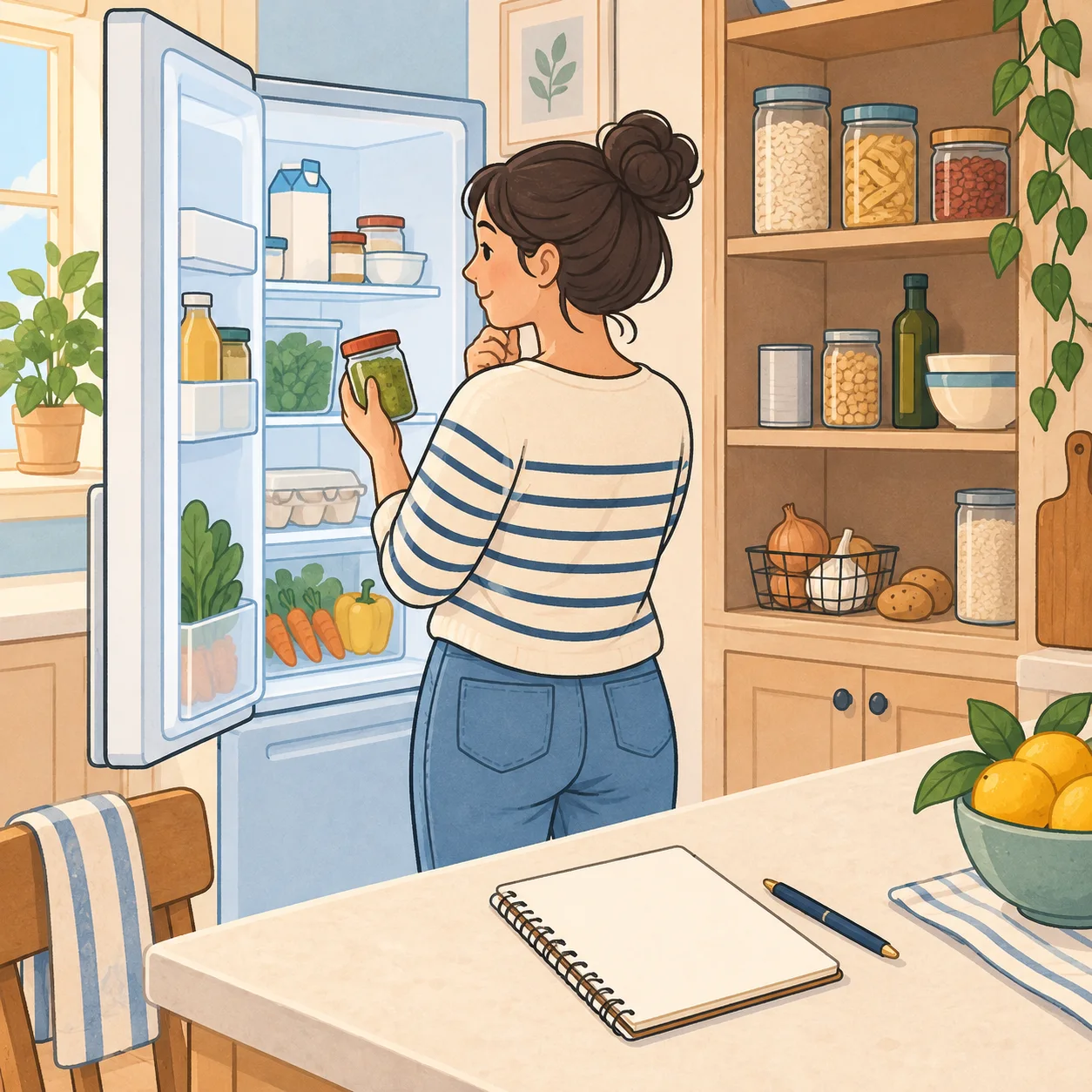
Open the fridge first. Look behind the things you usually reach for. Then check the freezer and pantry.
You are looking for three kinds of food:
- Use soon: fresh food, opened packs, and leftovers that need a plan.
- Already have: ingredients you might buy again by mistake.
- Enough for a meal: food that can become dinner with one or two missing ingredients.
You do not need a perfect inventory. A short note on your phone works. If you find half a bag of spinach, two portions of cooked beans, and plenty of rice, that is enough information to change the next shopping trip.
Food safety still comes first. Do not plan a meal around food that was stored unsafely or is past a safety-based use-by date.
Plan for the week you really have
Before choosing meals, count the evenings when someone will actually cook and eat at home. A busy Thursday, a dinner invitation, and leftovers from Wednesday all change what belongs on the list.
Choose one or two meals that use the food you found. Keep the rest of the week flexible.
For example, spinach and beans could become a quick pan dinner. Rice from the pantry means you do not need to buy another base. Your list might need only an onion and a sauce ingredient.
The point is not to use every item in one heroic meal. It is to give the food most likely to be forgotten a clear next step.
Write a list of gaps, not a list of wishes
Now write down the ingredients you still need. Add an amount when it helps: “two onions for two dinners” is more useful than “vegetables.”
Before adding something to the list, ask:
1. Do we already have it? 2. What meal will use it? 3. How much will we eat before the next shop?
This also helps with offers. A large pack costs more if half of it goes unused. The EPA advises buying larger quantities only when you expect to use the food before it spoils.
Keep a place for what needs eating first
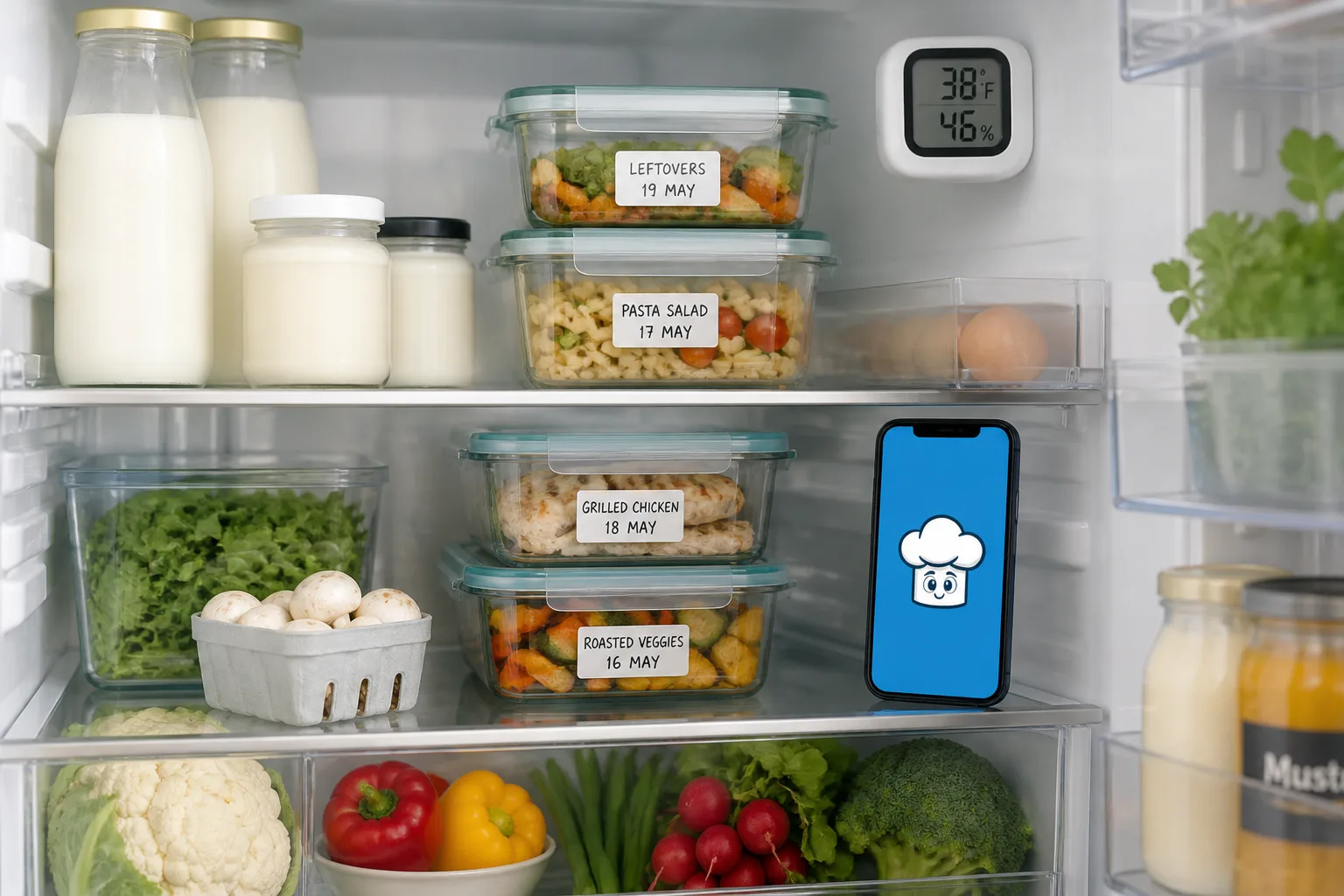
Put the ingredients you identified as urgent where you will see them. A small “use first” area in the fridge can be enough. Move leftovers there, label them with the day they were made, and check trusted storage advice when you are unsure how long they keep.
Then glance at that area before deciding what to cook. This closes the loop between shopping and eating. Otherwise, the list may be accurate on Saturday and forgotten by Tuesday.
What if someone else shops too?
A shared list helps only when both people can see what is already at home and what has been bought. Cross off items as they go into the basket. If plans change, update the list before the next person shops.
The aim is simple: one clear version of the kitchen, instead of two good memories that disagree about whether there is milk.
Where Chefito can help
You can do this with paper. Chefito makes the same routine easier to repeat: check what is in your inventory, notice food that needs using soon, plan meals from what you have, and put the missing ingredients on a shopping list.
Start with a few foods that are easy to forget. There is no need to record every spice before the app can be useful. If you want to try the routine on your next shop, get Chefito and add the foods you want to use first.
For the bigger money picture, read how much wasted food can cost a family. If dinner is the harder part, plan meals around what you already have.
FAQ
Do I need an app to save money on groceries?
No. Checking your food before shopping, planning realistic meals, and buying only the gaps works with a paper list too. An app can make that information easier to share and keep up to date.
Should I stop buying offers and larger packs?
Not necessarily. Ask whether your household will use the food in time. A lower price per item does not help if much of the pack is thrown away.
What is the easiest first step?
Check the fridge, freezer, and pantry before writing your next list. Choose one food to use soon and one meal it could become.
Ready to track your pantry instead of guessing?
Download Chefito to keep food dates visible, plan from your actual stock, and build a clearer shopping list.